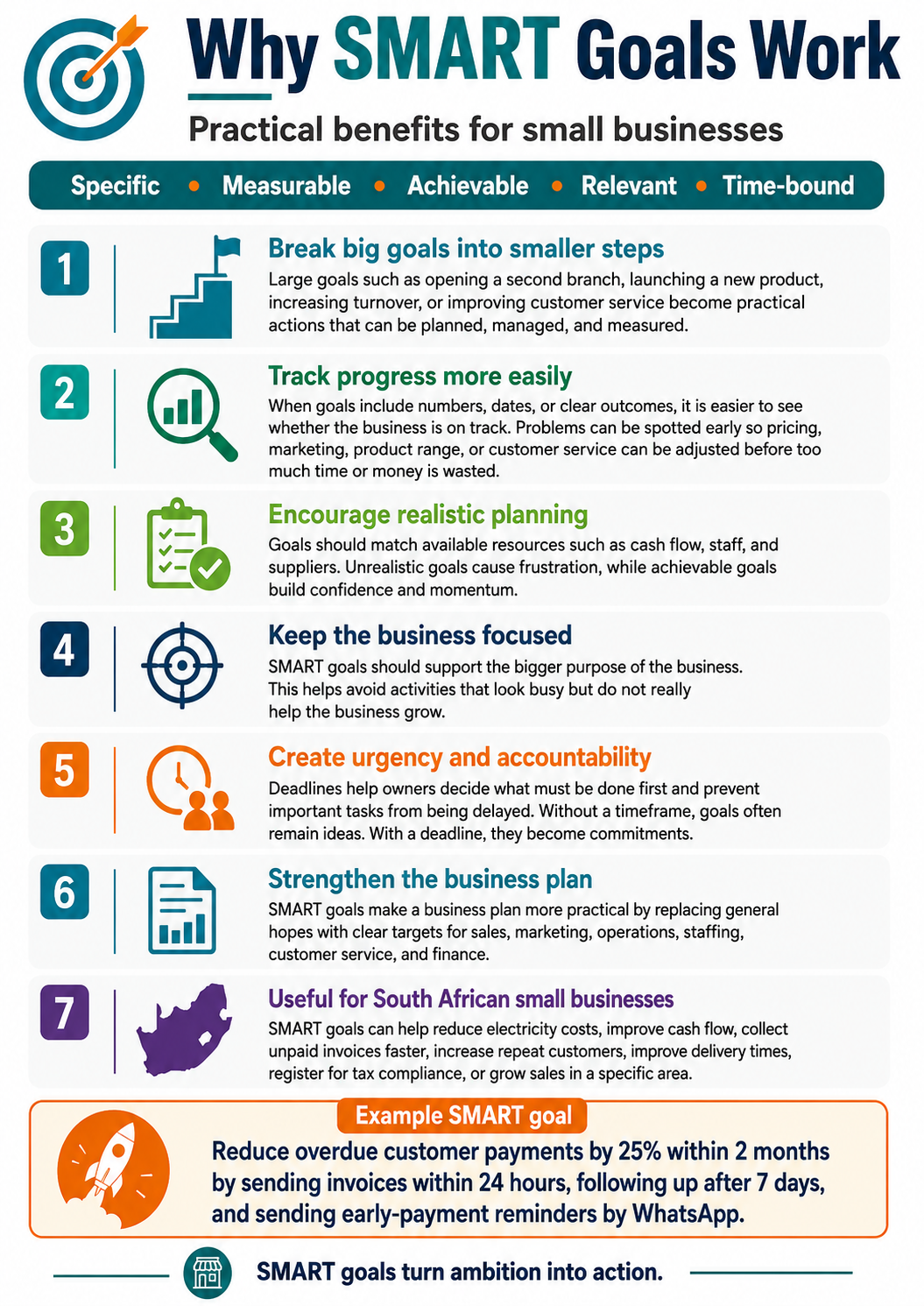
SMART goals help you turn broad intentions into clear, practical actions. Instead of saying, “I want my business to grow,” a SMART goal helps you define exactly what growth means, how you will measure it, whether it is realistic, why it matters, and when you want to achieve it.
For small businesses, this is especially useful because time, money and staff are often limited. A clear goal helps you decide where to focus your energy and which activities are worth doing.
A SMART goal is Specific, Measurable, Achievable, Relevant and Time-bound. This means that the goal is clearly described, can be tracked, is realistic, supports your wider business objectives, and has a deadline. One of the biggest benefits of SMART goals is that they increase your chances of success. Vague goals are easy to ignore because they do not tell you what to do next. A goal such as “increase sales” may sound useful, but it is not clear enough. A better SMART goal would be: “Increase monthly sales by 10% over the next three months by contacting existing customers and promoting two best-selling products on Facebook and WhatsApp.” This kind of goal gives you direction. It tells you what you are aiming for, how much improvement you want, what actions you will take, and when you will check the result.